South Korea: new rules on e-liquids and flavours

2026-03-11T12:12:10+01:00 March 11th, 2026|Autorità, Regulations, World|

South Korea is set to change its rules on nicotine products: as of April 24, 2026, following the revision of the Tobacco Business Act by the Ministry of Health and Welfare, all products containing nicotine — including synthetic nicotine — will be reclassified as “tobacco”. The stated objective is to close a “loophole” that had allowed the sale and promotion of electronic cigarettes and vaping liquids, particularly those containing synthetic nicotine, under a less regulated framework. As a result of this reclassification, e-cigarette liquids will, for the first time, fully fall under a tobacco-style regulatory regime, with the application of the rules set out in the National Health Promotion Act: mandatory health warnings, strict advertising restrictions, and a ban on labels referring to flavours. The crackdown also extends to sales through vending machines: these may be used only by authorised retailers, must include age-verification systems, and may be placed exclusively in controlled areas (for example, smoking rooms or adults-only zones). Violations — including improper advertising, missing health warnings, or non-compliant vending machine placement — may result in fines of up to KRW 10 million (€5,877.88) or up to one year of imprisonment. In addition, the use of all tobacco products, including electronic cigarettes, will be prohibited in already designated non-smoking areas, with penalties of up to KRW 100,000 (€58.78). The Ministry has announced inspections starting from late April in order to enforce the new rules. The government has justified this decision on the basis of the growing interest of young people in vaping and the spread of unsupervised vending machines, which are often not equipped with adequate age-verification systems. [...]

Norway: ban on cross-border online sales of nicotine products

2026-03-11T12:09:16+01:00 March 11th, 2026|Autorità, Regulations, World|

As of January 1, 2026, Norway prohibits private individuals from purchasing tobacco products from abroad through online sales (so-called cross-border sales). The Norwegian Customs Agency (Tolletaten) reserves the right to detain, confiscate, and destroy goods imported in breach of the ban, without any reimbursement. With specific reference to vaping, the ban includes: electronic cigarettes and e-liquids containing nicotine; electronic cigarettes and nicotine-free e-liquids with characterising flavours. However, the legislation provides for some exceptions: the import of electronic cigarettes and nicotine-free e-liquids with tobacco flavour is permitted; a very specific exemption applies to nicotine products: a private individual may import electronic cigarettes and nicotine-containing e-liquids for personal use as a smoking cessation aid, but only if the products comply with the requirements of pharmaceutical legislation. Nicotine pouches also fall within the scope of the ban. By contrast, tobacco-free and nicotine-free pouches may still be imported.

Mexico tightens customs rules on vapes: import ban takes effect

2026-03-11T12:06:58+01:00 March 11th, 2026|Autorità, Regulations, World|

On January 16, 2026, the Mexican government published in the Diario Oficial de la Federación (DOF) a reform presented as a “public health” measure, significantly strengthening the sanctions framework applicable to vaping products. The provisions entered into force in the days immediately following publication and triggered enforcement measures with practical consequences also for foreign nationals. The central element of the reform is its supply-chain approach: it is not merely a matter of restricting retail sales, but of targeting commercial activities connected to vaping products, including so-called “analogous electronic systems”, at every level — production, distribution, commercialisation, importation, and related activities. For travellers, carrying an electronic cigarette in their luggage may become a serious issue. According to press sources, in the event of an inspection, devices may be confiscated, and very substantial financial penalties may apply; where there is suspicion of conduct linked to distribution activities, prison sentences of up to eight years may also be imposed. It is also worth highlighting the political framing of the reform: within the same legislative framework, vaping products are referred to alongside toxic substances, chemical precursors, and unauthorised synthetic drugs (including fentanyl), thus placing vaping within the same policy “risk” perimeter.

BANGLADESH – Total ban on vaping and “emerging products”

2026-01-15T12:19:09+01:00 January 15th, 2026|Autorità, Regulations, World|

On 30 December 2025, Bangladesh adopted the Smoking and Tobacco Products Use (Control) (Amendment) Ordinance, 2025, introducing a full ban for production, import/export, storage, sale, of e-cigarettes and comparable categories of products, with immediate impact across the entire supply chain. Severe penalties apply, including up to 6 months’ imprisonment and/or fines of up to Tk 500,000 (approx. €3,506.55). The definition of “tobacco products” is expanded to also include nicotine pouches. In short, the country is taking a prohibitionist approach, with a high enforcement and penalty risk for both operators and consumers.

AZERBAIJAN – New rules announced and tighter enforcement on e-cigarettes

2026-01-15T12:17:55+01:00 January 15th, 2026|Autorità, Regulations, World|

Azerbaijan has announced its intention to introduce new legislation on e-cigarettes, aimed at strengthening control mechanisms and establishing a new penalties framework. The implementing details (including fine amounts and enforcement tools) will be set out through secondary legislation following adoption of the law. The main stated rationale is the protection of minors and the reduction of use among young people, referring to World Health Organization (WHO) data indicating significantly higher e-cigarette use among minors than among adults. The proposal also aims to introduce a clearer and more distinct classification between traditional tobacco, heated tobacco products, and e-cigarettes, in line with regulatory practices adopted internationally. The regulatory direction points towards a tightening of the framework for the e-cig segment. It is therefore crucial to monitor the implementing measures that will concretely define the scope, obligations, and enforcement modalities.

CHINA: New rules for nicotine pouches, now under the tobacco monopoly

2026-01-15T12:15:51+01:00 January 15th, 2026|Autorità, Regulations, World|

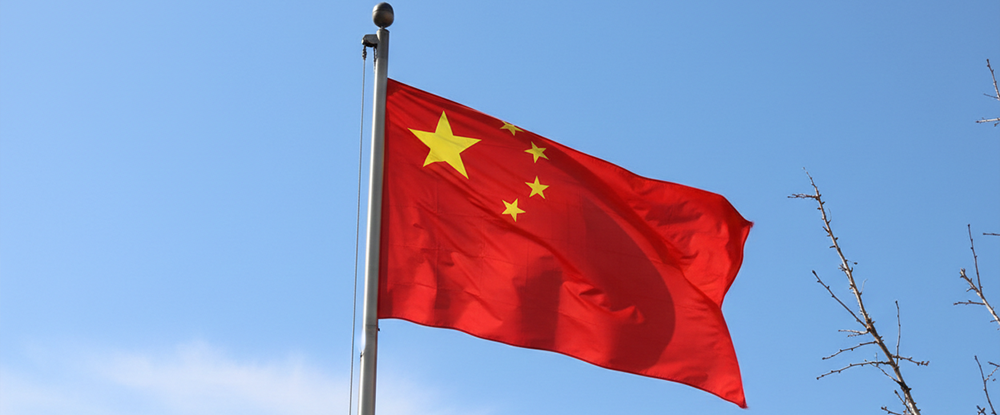
China has recently introduced the first official regulatory framework for the nicotine pouches market and, more broadly, for oral nicotine products through a measure dated 6 January 2025 (published on 9 January 2026). The new rules entered into force immediately, bringing an end to a long-standing regulatory gap. The STMA (State Tobacco Monopoly Administration) defines “smokeless products” as products consumed orally, nasally, or through external use, without combustion. This definition explicitly includes pouches, snus, and chewing tobacco, but also oral strips and nicotine patches. The most significant change is the classification of smokeless products: these products are now treated as cigarettes or fine-cut tobacco, and therefore fall under China’s strict tobacco monopoly system, which entails tighter controls over production, branding, and distribution. In addition, the STMA places them in a “restricted” industrial category, where investments and production capacity may be subject to approval.

Reform of tobacco product taxation in the EU

2026-01-07T10:11:05+01:00 November 20th, 2025|Autorità, Regulations, World|

Reform of tobacco product taxation in the EU: what (really) changes for businesses and the market If adopted, the new excise directive will start to apply from 2028, raising EU minimum rates and also including the “new” nicotine products. Here is a practical guide – designed for manufacturers, importers, distributors and retailers – to understand the Commission’s proposal (July 2025) and prepare in advance. Historical background On 9 December 2024, 16 Member States called for the modernisation of the TTD to include new products. In May 2025, a subsequent letter signed by 15 countries urged the Commission to present the review proposal without further delay. On 16 July 2025, the European Commission therefore presented the proposal for a recast of the Tobacco Taxation Directive (TTD). The proposal expands the scope of the directive to also include electronic cigarettes and nicotine pouches, introducing minimum excise rates for these products. Concerns nevertheless remain among some Member States and across the various supply chains regarding the possible impact on local industries, inflation and illicit trade. Directive 2011/64/EU (TTD) harmonised the structure and minimum excise levels on cigarettes and smoking tobacco, but does not adequately cover e-cigarettes, heated tobacco and nicotine pouches. In line with the EU Beating Cancer Plan, the Commission proposed in 2025 a far-reaching revision, with entry into application envisaged from 2028. Why a revision is needed Divergences between Member States: wide tax gaps fuel cross-border shopping and market distortions. New products without a common framework: misaligned tax treatment for e-liquids, heated tobacco and pouches. Public health objective: higher prices are expected to lead to lower consumption, especially among young people. The pillars [...]

New Packaging Regulation (PPWR)

2026-01-07T10:11:17+01:00 October 28th, 2025|Autorità, Regulations, World|

On February 11, 2025, REGULATION (EU) 2025/40 of the European Parliament and of the Council of December 19, 2024, known as PPWR, concerning packaging and packaging waste, came into force. The PPWR aims to reduce the amount of unnecessary packaging, promote reuse and recycling, and decrease the use of virgin raw materials. Its scope is broad, covering all packaging (regardless of material or sector), related waste, and all European Union member states, addressing the entire life cycle of packaging, from design to end-of-life management. By 2030, the introduced measures are projected to significantly cut climate-changing emissions, water usage, and overall environmental and health impacts. In particular, the PPWR stipulates that: All packaging must be reusable or recyclable in an economically sustainable manner by 2030. Excessive and unnecessary packaging must be reduced. The recycled content in packaging must be increased. Hazardous and harmful substances in packaging must be phased out. Relevant deadlines August 12, 2026: From this date, packaging may only be placed on the EU market if it complies with the PPWR. Stocks already placed on the market before that date will remain saleable. August 12, 2028: repeal of current environmental labeling systems based on EC Decision 129/97, such as in Italy, France, Spain, and Bulgaria, and introduction of new PPWR implementation rules. The implications for companies are considerable, requiring a review of packaging design and careful management of material flows to certify recyclability, recycled content, and, where applicable, reuse. It also becomes strategic to plan stock management in view of August 12, 2026, and to monitor future implementing acts in order to comply with the technical and labeling requirements. [...]

BLOG – Environmental labeling and Extended Producer Responsibility 2

2026-01-07T10:11:23+01:00 October 23rd, 2025|Autorità, Regulations, World|

The series of in-depth analyses on the Waste Framework Directive (Dir. 2008/98/EC, amended by Dir. 2018/851) and the Packaging and Packaging Waste Directive (Dir. 94/62/EC amended by Dir. 2018/852) continues. These two directives create a stringent regulatory framework that manufacturers and distributors must comply with in order to operate in the European market. Extended Producer Responsibility (EPR) for packaging in Europe is a legal system that transfers the burden of end-of-life packaging management to producers, importers, and distributors. This is not just an economic obligation, but a real environmental responsibility, which aims to make those who place packaging on the market directly involved in reducing its environmental impact. In practice, companies must finance and organize activities such as: collection of packaging waste transport to treatment facilities recycling and recovery final disposal In most European countries, producers fulfill these obligations by joining recognized consortia or collective organizations. These entities centralize the management of the recovery chain, ensuring that companies comply with national regulations. For sellers operating outside their national market, it is almost always necessary to appoint a local authorized representative to act as a point of contact for the authorities in the country where the packaged products are placed on the market and to ensure regulatory compliance. Currently, in Europe, EPR is managed in a fragmented manner at the national level, both in terms of fees and obligations. However, starting in August 2026, with the entry into force of the Packaging and Packaging Waste Regulation (PPWR), there will be a gradual harmonization of EPR schemes among Member States, of criteria for calculating financial contributions, and of criteria for appointing authorized representatives. To [...]

Environmental Labeling and Extended Producer Responsibility 1

2025-09-23T16:35:49+02:00 September 24th, 2025|Autorità, Regulations, World|

The protection of the environment and the sustainable management of resources have now become essential pillars of European policies. To address challenges such as increasing waste, material waste, and the impacts associated with the use of packaging, the European Union has developed over time a coherent regulatory framework aimed at promoting the transition to a circular economy. In this context, two directives play a central role: the Waste Framework Directive (2008/98/EC, amended by 2018/851) and the Packaging and Packaging Waste Directive (94/62/EC amended by Directive (EU) 2018/852). The former strengthens the waste hierarchy and producer responsibility; the latter promotes the reduction of the environmental impact of packaging, encouraging recycling and reuse. These directives work synergistically towards the European goal of a circular economy, in which packaging is designed, produced, distributed, and disposed of in a sustainable way. These directives are relevant for producers and distributors because they introduce binding obligations on packaging and waste management, which must be complied with in order to operate in the European market. In this first article, we will focus on the issue of environmental labeling, as regulated by the Packaging and Packaging Waste Directive, while in the next article we will examine in greater depth the principle of producer responsibility. Environmental labeling refers to the set of information displayed on a product’s packaging that serves to identify the materials it is made of and to inform consumers of the correct methods of collection and disposal. In other words, it is a mandatory tool that makes the final destination of packaging transparent, facilitating separate collection and ensuring compliance with legal requirements. Currently, in Europe, there is still [...]