South Korea: new rules on e-liquids and flavours

2026-03-11T12:12:10+01:00 March 11th, 2026|Autorità, Regulations, World|

South Korea is set to change its rules on nicotine products: as of April 24, 2026, following the revision of the Tobacco Business Act by the Ministry of Health and Welfare, all products containing nicotine — including synthetic nicotine — will be reclassified as “tobacco”. The stated objective is to close a “loophole” that had allowed the sale and promotion of electronic cigarettes and vaping liquids, particularly those containing synthetic nicotine, under a less regulated framework. As a result of this reclassification, e-cigarette liquids will, for the first time, fully fall under a tobacco-style regulatory regime, with the application of the rules set out in the National Health Promotion Act: mandatory health warnings, strict advertising restrictions, and a ban on labels referring to flavours. The crackdown also extends to sales through vending machines: these may be used only by authorised retailers, must include age-verification systems, and may be placed exclusively in controlled areas (for example, smoking rooms or adults-only zones). Violations — including improper advertising, missing health warnings, or non-compliant vending machine placement — may result in fines of up to KRW 10 million (€5,877.88) or up to one year of imprisonment. In addition, the use of all tobacco products, including electronic cigarettes, will be prohibited in already designated non-smoking areas, with penalties of up to KRW 100,000 (€58.78). The Ministry has announced inspections starting from late April in order to enforce the new rules. The government has justified this decision on the basis of the growing interest of young people in vaping and the spread of unsupervised vending machines, which are often not equipped with adequate age-verification systems. [...]

Norway: ban on cross-border online sales of nicotine products

2026-03-11T12:09:16+01:00 March 11th, 2026|Autorità, Regulations, World|

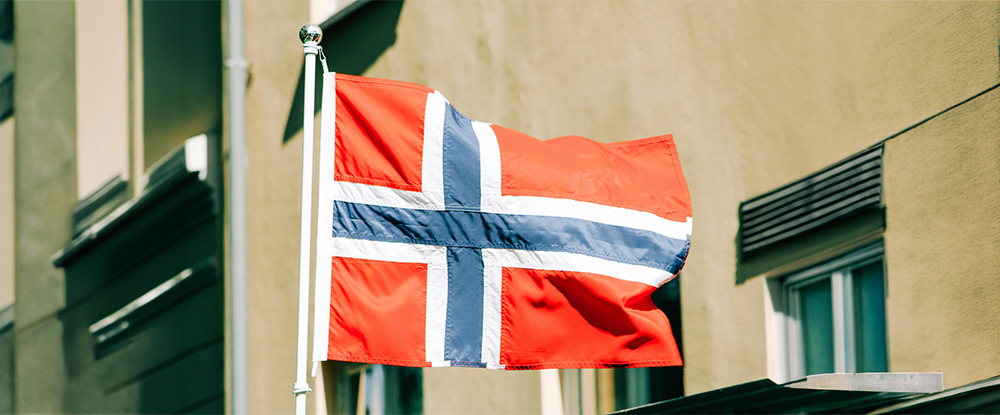
As of January 1, 2026, Norway prohibits private individuals from purchasing tobacco products from abroad through online sales (so-called cross-border sales). The Norwegian Customs Agency (Tolletaten) reserves the right to detain, confiscate, and destroy goods imported in breach of the ban, without any reimbursement. With specific reference to vaping, the ban includes: electronic cigarettes and e-liquids containing nicotine; electronic cigarettes and nicotine-free e-liquids with characterising flavours. However, the legislation provides for some exceptions: the import of electronic cigarettes and nicotine-free e-liquids with tobacco flavour is permitted; a very specific exemption applies to nicotine products: a private individual may import electronic cigarettes and nicotine-containing e-liquids for personal use as a smoking cessation aid, but only if the products comply with the requirements of pharmaceutical legislation. Nicotine pouches also fall within the scope of the ban. By contrast, tobacco-free and nicotine-free pouches may still be imported.

Mexico tightens customs rules on vapes: import ban takes effect

2026-03-11T12:06:58+01:00 March 11th, 2026|Autorità, Regulations, World|

On January 16, 2026, the Mexican government published in the Diario Oficial de la Federación (DOF) a reform presented as a “public health” measure, significantly strengthening the sanctions framework applicable to vaping products. The provisions entered into force in the days immediately following publication and triggered enforcement measures with practical consequences also for foreign nationals. The central element of the reform is its supply-chain approach: it is not merely a matter of restricting retail sales, but of targeting commercial activities connected to vaping products, including so-called “analogous electronic systems”, at every level — production, distribution, commercialisation, importation, and related activities. For travellers, carrying an electronic cigarette in their luggage may become a serious issue. According to press sources, in the event of an inspection, devices may be confiscated, and very substantial financial penalties may apply; where there is suspicion of conduct linked to distribution activities, prison sentences of up to eight years may also be imposed. It is also worth highlighting the political framing of the reform: within the same legislative framework, vaping products are referred to alongside toxic substances, chemical precursors, and unauthorised synthetic drugs (including fentanyl), thus placing vaping within the same policy “risk” perimeter.

BANGLADESH – Total ban on vaping and “emerging products”

2026-01-15T12:19:09+01:00 January 15th, 2026|Autorità, Regulations, World|

On 30 December 2025, Bangladesh adopted the Smoking and Tobacco Products Use (Control) (Amendment) Ordinance, 2025, introducing a full ban for production, import/export, storage, sale, of e-cigarettes and comparable categories of products, with immediate impact across the entire supply chain. Severe penalties apply, including up to 6 months’ imprisonment and/or fines of up to Tk 500,000 (approx. €3,506.55). The definition of “tobacco products” is expanded to also include nicotine pouches. In short, the country is taking a prohibitionist approach, with a high enforcement and penalty risk for both operators and consumers.

AZERBAIJAN – New rules announced and tighter enforcement on e-cigarettes

2026-01-15T12:17:55+01:00 January 15th, 2026|Autorità, Regulations, World|

Azerbaijan has announced its intention to introduce new legislation on e-cigarettes, aimed at strengthening control mechanisms and establishing a new penalties framework. The implementing details (including fine amounts and enforcement tools) will be set out through secondary legislation following adoption of the law. The main stated rationale is the protection of minors and the reduction of use among young people, referring to World Health Organization (WHO) data indicating significantly higher e-cigarette use among minors than among adults. The proposal also aims to introduce a clearer and more distinct classification between traditional tobacco, heated tobacco products, and e-cigarettes, in line with regulatory practices adopted internationally. The regulatory direction points towards a tightening of the framework for the e-cig segment. It is therefore crucial to monitor the implementing measures that will concretely define the scope, obligations, and enforcement modalities.

CHINA: New rules for nicotine pouches, now under the tobacco monopoly

2026-01-15T12:15:51+01:00 January 15th, 2026|Autorità, Regulations, World|

China has recently introduced the first official regulatory framework for the nicotine pouches market and, more broadly, for oral nicotine products through a measure dated 6 January 2025 (published on 9 January 2026). The new rules entered into force immediately, bringing an end to a long-standing regulatory gap. The STMA (State Tobacco Monopoly Administration) defines “smokeless products” as products consumed orally, nasally, or through external use, without combustion. This definition explicitly includes pouches, snus, and chewing tobacco, but also oral strips and nicotine patches. The most significant change is the classification of smokeless products: these products are now treated as cigarettes or fine-cut tobacco, and therefore fall under China’s strict tobacco monopoly system, which entails tighter controls over production, branding, and distribution. In addition, the STMA places them in a “restricted” industrial category, where investments and production capacity may be subject to approval.

OMAN: BAN TRADE OF E-CIG AND SHISHA

2026-01-08T10:16:49+01:00 February 8th, 2024|Autorità, Regulations, World|

On 7 of January the Oman Sultan prohibited e-cigarette trade in the country. Followed by the new law, every person that violates the prohibition will be subject to an administrative fine of up to OMR 1,000 (2.590 USD) with the penalty doubled in case of repeated violations. For the daily violation will be imposed a daily penalty of 50 OMR (129,50 USD), with a maximum import of 2.000 (5.181 USD). The decision was published in the Official Gazette and came into force the day after its publication.